
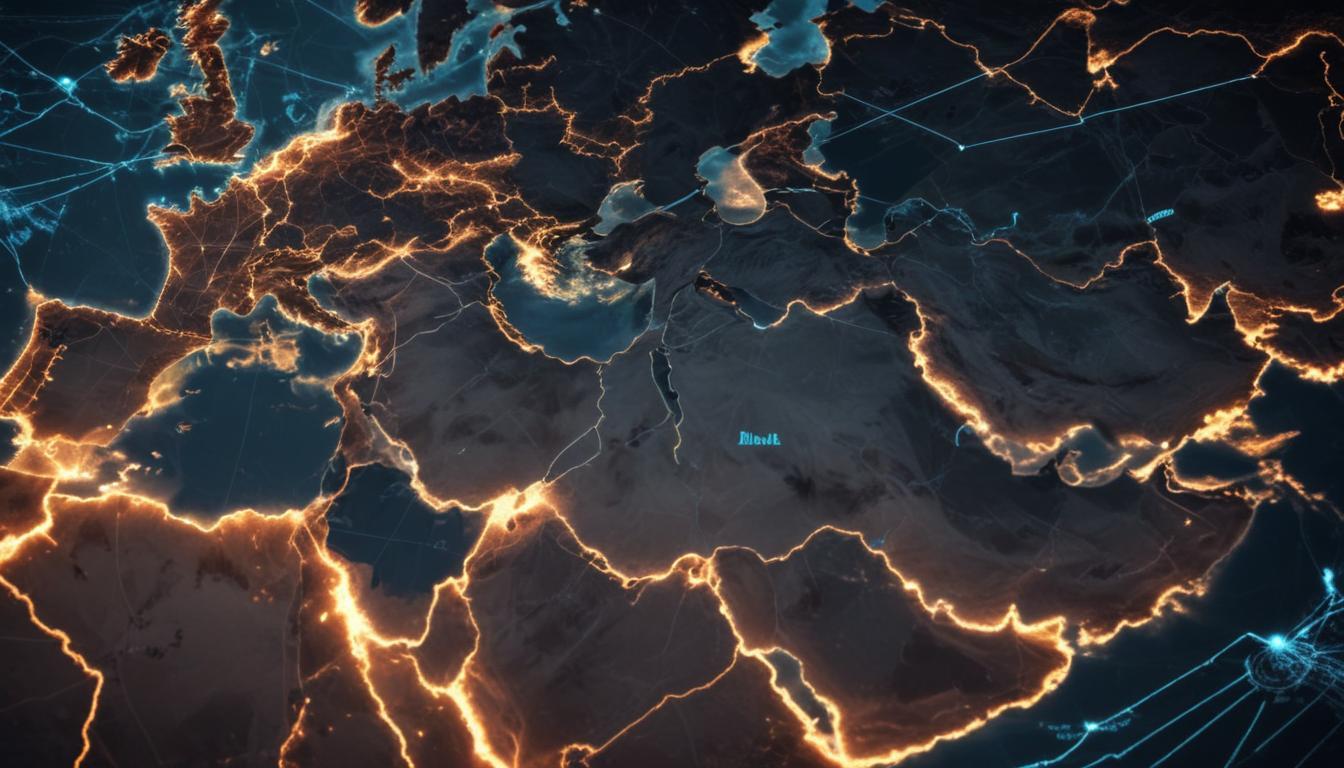
Cybersecurity threats are surging as geopolitical tensions escalate, particularly in the Middle East. The latest events highlight the interconnectedness of cyber warfare, supply chain vulnerabilities, and emerging technological risks.
Geopolitical Cyber Conflicts
A coordinated cyber and kinetic assault by the U.S. and Israel has plunged Iran into a 12-hour digital blackout, crippling government operations, financial systems, and telecommunications. The attack, described as a “decapitation strike,” targeted Iran’s power grid, banking systems, and military communications, while airstrikes hit nuclear and missile facilities. Iranian officials have yet to issue a formal statement, but anonymous sources confirmed the severity of the disruption. Cybersecurity experts drew parallels to the 2010 Stuxnet operation, calling this a “next-generation cyber-physical assault” with unprecedented coordination between Western and Israeli forces. Civilian internet access was also severed, leaving millions unable to communicate. The international community remains divided, with Russia and China condemning the strikes as “reckless escalation,” while some European allies privately supported the operation. The UN Security Council is expected to convene an emergency session this week.
Supply Chain and Third-Party Risks: Dark Web Intelligence and Data Breaches Expose Gaps
Supply chain cyber risks have taken center stage as geopolitical tensions escalate. Bitsight unveiled Breach Intelligence, a new tool designed to enhance third-party risk management (TPRM) by leveraging dark web intelligence. The platform monitors underground forums, ransomware leak sites, and Telegram channels to detect compromised credentials and vendor-related breaches in real time, reducing response times from weeks to hours. With 30% of data breaches now originating from third-party dependencies, organizations face an expanded attack surface exacerbated by AI-accelerated zero-day exploits. Bitsight’s solution filters noise by surfacing only supply-chain-relevant events, automating severity classification and recommending mitigation actions.
Meanwhile, Cloud Imperium Games (CIG), developer of Star Citizen, faced backlash after disclosing a data breach that exposed user metadata, contact details, and dates of birth—but delayed notification for over a month. The company claimed the incident posed “no risk” since no financial data or passwords were compromised, but gamers criticized the lack of transparency and hidden disclosure. Experts warn that such data can fuel phishing campaigns, especially when combined with other leaked datasets. CIG’s response—buried in a low-visibility service alert—sparked outrage among its millions-strong community, with users demanding accountability. In a separate incident, Dima Ashkinazi, founder of Alerts Bar, revealed how info-stealers bypass 2FA and antiviruses by silently exfiltrating browser cookies, passwords, and crypto wallets. His team discovered a leaked Oracle senior director’s account with over 400 exposed passwords, prompting a rapid response. Ashkinazi warned that 80% of business attacks start with info-stealers, often distributed via fake software cracks or malicious captchas. Hackers exploit a 2-hour “golden window” between data theft and sale on darknet forums, where ransomware groups purchase access for double extortion or espionage. He advocated for dark web monitoring as a “last line of defense.”
Critical Vulnerabilities: Chrome, OAuth Abuse, and AI Risks
Google patched a high-severity Chrome vulnerability (CVE-2026-0628, CVSS 8.8) that allowed malicious extensions to escalate privileges via the Gemini Live panel. Discovered by Palo Alto Networks’ Unit 42, the flaw enabled extensions with basic permissions to inject scripts into the AI side panel, granting access to local files, cameras, and microphones. Dubbed “Glic Jack,” the exploit underscores risks of AI integration in browsers, where privileged access for agents like Gemini could be abused for data exfiltration or persistent attacks. Researchers warned that AI-driven browsers reintroduce classic risks like XSS and privilege escalation, urging stricter WebView policy enforcement.
Microsoft warned of OAuth phishing campaigns targeting government and public-sector organizations. Attackers abused legitimate OAuth redirect features in platforms like Entra ID and Google Workspace to bypass email/browser defenses, tricking users into downloading malware-laden ZIP files. The attacks used social engineering lures (e.g., e-signature requests, Teams recordings) and EvilProxy frameworks to steal credentials. Microsoft removed several malicious OAuth apps but advised organizations to limit user consent and audit application permissions to mitigate risks.
These incidents highlight the increasing complexity of cyber threats. As AI integration in browsers and OAuth abuse become more prevalent, organizations must stay vigilant and adopt proactive defense strategies. More information on these threats is available in our internal blog articles on cybersecurity landscape and evolving cyber threats.
Key Takeaways and Recommendations
Organizations in critical infrastructure sectors (energy, finance, healthcare) must monitor for Iran-linked threats, implement MFA, and review supply chain dependencies. The NCSC and CISA advise patching systems, updating incident response plans, and subscribing to early warning services. Adopt dark web monitoring tools (e.g., Bitsight Breach Intelligence) to detect compromised vendor credentials early. Conduct third-party risk assessments and enforce least-privilege access to mitigate spillover risks. Patch Chrome (CVE-2026-0628) and audit OAuth applications to prevent privilege escalation. Disable unnecessary browser extensions and restrict AI panel permissions. Follow CIG’s missteps as a cautionary tale—transparency and timely disclosure are critical to maintaining trust. Prepare for phishing surges leveraging leaked PII (e.g., names, DOBs). Hackers are weaponizing AI (e.g., WormGPT) to automate attacks. Defenders must leverage AI-driven threat intelligence (e.g., Bitsight, Alerts Bar) to stay ahead. Train employees on social engineering tactics like fake captchas and malicious “cracks”.
Final words
The escalating cyber conflicts and supply chain threats highlight the need for robust cyber defenses. Organizations must prioritize real-time monitoring and cross-sector collaboration to mitigate risks. Stay vigilant and prepared for evolving threats.
[…] Amid escalating Middle East tensions, experts warn of imminent Iranian state-sponsored cyberattacks targeting U.S. critical infrastructure, financial sectors, and allied nations. The Cybersecurity and Infrastructure Security Agency (CISA) faces heightened operational strain due to a partial government shutdown, leadership turmoil (e.g., reassignment of acting director Madhu Gottumukkala), and a 30% staff reduction since 2020. Iranian APT groups like APT33 (Elfin), APT34 (OilRig), and APT35 (Charming Kitten) are expected to deploy wipers (ZeroCleare, Shamoon), DDoS attacks, and ransomware-as-a-service (RaaS) partnerships. Organizations are urged to adopt zero-trust architectures, AI-driven anomaly detection, and tabletop exercises for destructive malware scenarios. Halcyon’s Ransomware Research Center provides actionable intelligence on Iranian tactics. For more insights, refer to Cyber Warfare Escalates: Supply Chain Threats and Chrome Vulnerability. […]
[…] This incident is part of a larger landscape of escalating cyber threats and geopolitical tensions. For more on this trend, see our article on cyber warfare and supply chain threats. […]
[…] incident underscores the broader trend of cryptocurrency’s role in sanctions evasion. The Central Bank of Iran’s $507M USDT purchase in January 2026 is a notable example. Ariomex’s activities suggest a similar purpose, with […]
[…] infrastructure. The breach aligns with a broader trend of escalating cyber threats, as detailed in recent analyses. For more details, refer to IT News […]
[…] alerted users to a sophisticated phishing campaign spoofing internal email threads. Additionally, Chainalysis reported a significant increase in cryptocurrency transactions by sanctioned entities, highlighting the use […]
[…] The Central Bureau of Investigation (CBI) registered a case against Anil Ambani, Reliance Communications Limited, and former director Manjari Ashok Kacker for allegedly defrauding Punjab National Bank (PNB) and United Bank of India (now merged with PNB) of ₹1,085.19 crore between 2013–2017. The complaint was filed by PNB’s stressed assets management branch, marking another high-profile financial fraud case. These incidents highlight the need for robust legal frameworks to tackle such crimes. For more on financial frauds and regulatory actions, refer to the kcnet.in article on cyber warfare …. […]
[…] Help > About Google Chrome to trigger automatic updates. This advisory highlights the importance of patching software promptly to mitigate risks […]
[…] tension is a significant aspect of the broader cybersecurity landscape, as highlighted in the cyber warfare and supply chain vulnerabilities […]
[…] aircraft to the UAE amid fears of collateral damage to energy, banking, and finance sectors. Further insights on cyber warfare tactics are available in recent reports. Read […]
[…] State-sponsored cyber operations are characterized by their sophisticated tactics and strategic targets. In the case of the NCBJ attack, the use of false flags adds a layer of complexity, making attribution challenging. The coordination between NCBJ and national agencies underscores the need for robust cyber defense cooperation and information sharing. This is particularly crucial given the rising geopolitical tensions and the escalating cyber conflicts between nations such as Russia, Iran, and the United States. Escalating cyber conflicts […]
[…] in Iran. The incident highlights the rising threat of geopolitical cyber risks, as noted in the recent escalation of cyber warfare. The medical sector’s vulnerability underscores the need for robust cyber defenses, as […]
[…] in these technologies by framing cybersecurity as corporate risk management, emphasizing that edge computing expansion amplifies exposure. Visit TechTarget for the full analysis: […]
[…] including regular security audits and employee training on cybersecurity best practices. Supply chain vulnerabilities and rapid digital adoption without adequate security measures are major contributing factors to the […]
[…] scam highlights the need for vigilance and awareness among the public, especially in light of the escalating cyber threats and the sophistication of modern cyber fraud […]
[…] The incident underscores the growing targeting of consumer-facing industries by cybercriminals. Supply chain vulnerabilities are increasingly exploited, with attackers leveraging third-party vendors and service providers to […]